
Sound Power Level (Lw) Test Service
Professional Third-Party Sound Power Test Lab
Sound Power Level (Lw) is a key parameter for evaluating the total noise emission of a product. Unlike Sound Pressure Level (SPL), which depends on measurement location, sound power represents the total acoustic energy emitted by a sound source, making it the most reliable metric for product noise comparison.
At Omniulabs, we provide professional Sound Power Level testing services, helping customers accurately quantify product noise, meet international standards, and support product validation.
What is Sound Power Level (Lw)?
Sound Power Level (Lw) describes the total acoustic energy radiated by a sound source per unit time, expressed in decibels (dB).
Sound Power v.s. Sound Pressure Level:
| Physical Quantity | Description |
|---|---|
| Sound Pressure Level (SPL) | Sound Level measured at a certain location |
| Sound Power Level (Lw) | Total sound energy emitted by the sound source itself |
It is defined as:
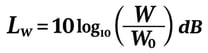
Where:
- Lw: Sound Power Level
- W: Sound power of the source
- W₀: Reference sound power (10⁻¹² W)
Unlike SPL, sound power is independent of distance and environment, making it ideal for standardized testing and product comparison.

Why Sound Power Testing is Important?
For equipment manufacturers and system integrators, sound power testing provides objective and comparable noise data that is essential for product development and validation.
Testing conducted by a third-party acoustic laboratory helps to:
Evaluate Overall Noise Emission
Accurately quantify the total noise output of equipment, such as:
- AI servers
- Industrial equipment
- Computer systems
- Cooling systems
Ensure Compliance with International Standards
Many product specifications and regulations require Sound Power Level (Lw) as a mandatory noise metric.
Establish Product Acoustic Specifications
Sound power data is commonly used in:
- Product datasheets
- Noise labeling and declarations
- Customer validation and acceptance testing
Our Sound Power Testing Capabilities
Acoustic Measurement Equipment
-
Precision measurement microphones
-
Multi-point measurement systems
-
Acoustic analysis software
Controlled Test Environment
-
Semi-anechoic chamber
-
Anechoic chamber
-
Low background noise environment
Measurement Methods
Sound power is typically determined from sound pressure measurements using "Measurement surface method".
Common Sound Power Test Standards
Sound power testing is performed according to internationally recognized standards:
- ISO 3744 — Engineering method for sound power determination
- ISO 3745 — Precision method in anechoic rooms
- ISO 7779 — Noise measurement for IT equipment
- ISO 9296 — Declared noise emission values
These standards ensure test results are accurate, repeatable, and globally comparable
FAQ
Q: What is the difference between sound power and sound pressure?
Sound pressure is measured at a specific location, while sound power represents the total acoustic energy emitted by the source.
Q: Why is sound power preferred for product comparison (e.g. ECO labels)?
Because it is independent of measurement distance and environment, making results consistent and comparable.
Q: Does sound power testing require an anechoic chamber?
Most sound power tests are conducted in semi-anechoic chamber to ensure accurate results.
Q: What products require sound power testing?
Generally including:
- Servers
- Cooling systems
- Industrial equipment
- Home appliances
- Electronic devices
Contact Us
Contact Omniulabs for reliable, fast, and internationally compliant acoustic testing services
- Email: service@omniulabs.com
- Tel: 886-2-77306037
- Add: 6F, No. 8-8, Lane 169, Kangning St., Xizhi District, New Taipei City, Taiwan